
'We are in a sweet spot.' 'Equity, on a standalone basis, will continue to remain the asset class to stay invested in.'

India's second largest IT services company Infosys on Thursday reported a 3.1 per cent year-on-year rise in net profit to Rs 6,215 crore for the September 2023 quarter. The earnings (before minority interest) of the Bengaluru-based company stood at Rs 6,026 crore in the year-ago period. The company - which competes in the IT services market with TCS, Wipro, HCL Technologies and others - saw its revenue rising 6.7 per cent to Rs 38,994 crore for the just-ended September quarter.

This is a good opportunity for long-term investors to pick quality small and midcap stocks at reasonable valuations.

A healthy growth in India's services segments has helped the country's total exports and imports of goods and services to cross the $800 billion mark during the first half of 2023, despite a slowdown in global demand, think tank GTRI said in a report on Monday. According to the analysis of the Global Trade Research Initiative (GTRI), exports of goods and services rose by 1.5 per cent to $385.4 billion during January-June this year, as against $379.5 billion in January-June 2022. Imports, however, dipped by 5.9 per cent to $415.5 billion during the six months of this year, as against $441.7 billion in January-June 2022.

Mukesh Ambani-led company will squeeze market shares and margins of existing players

Excise duties on mobile phones to be 1% without CENVAT credit or 6% with CENVAT credit. This provision will have marginal impact on telcos.

In a memorable year for the equity market, Dalal Street investors added a whopping Rs 81.90 lakh crore to their wealth in 2023 as a raft of positive factors powered a stellar rally in stocks. Experts said India's strong macroeconomic fundamentals, political stability owing to the BJP's success in recent elections in three significant states, optimistic corporate earnings outlook, signals from the US Federal Reserve about three prospective rate cuts next year and heavy retail investors participation played a major role in fuelling the stock market rally in 2023. In the year 2023, the 30-share BSE Sensex jumped 11,399.52 points or 18.73 per cent.

After a sharp correction over the last few months, analysts seem to be turning cautiously optimistic on the information technology (IT) sector and suggest there could be trading opportunities in select counters despite revenue and growth concerns that still plague the sector. "IT stocks valuations have corrected 17 per cent-49 per cent and stock prices have corrected 9 - 42 per cent since mid-December 2021. Nifty IT index valuation has corrected by 27 per cent and price by 21 per cent. "About two quarters ago, we made a case that valuation drivers have peaked.
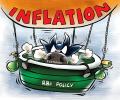
The Reserve Bank on Wednesday projected inflation to come down below the upper threshold level of 6 per cent by March quarter of the current fiscal. RBI Governor Shaktikanta Das said the central bank will keep 'Arjuna's eye' (focus) on the evolving inflation dynamics and will remain 'nimble and flexible' to deal with the price situation. Global commodity prices, including crude oil, have undergone some downward correction, but uncertainty continues to surround the near-term outlook in view of the prolonging geo-political hostilities. Moreover, the resurgence in domestic services sector activity could also lead to price increases, especially as firms pass on input costs.

Ratings firm Fitch on Wednesday assigned a stable outlook to the Indian auto components sector in 2012 and said it is expected to perform well on the back of demand from original equipment manufacturers for localised content.

Among the main gainers were Jio Financial Services which jumped 4.99 per cent, Tata Steel (2.09 per cent), Maruti Suzuki (1.87 per cent), M&M (1.31 per cent) and Infosys (1.19 per cent).

The International Monetary Fund (IMF) on Tuesday cut its projection of India's economic growth in 2022 to 6.8 per cent, as it joins other global agencies that have trimmed forecasts. The IMF had in July projected a gross domestic product (GDP) growth of 7.4 per cent for India in the fiscal year that started in April 2022. Even that forecast was lower than 8.2 per cent projected in January this year. India had grown at 8.7 per cent in 2021-22 fiscal (April 2021 to March 2022).

As many as 267 of 453 companies from the BSE500 index are trading above their consensus price targets, according to the data compiled by Bloomberg. Not all companies in the BSE500 index are tracked by analysts.

Equity mutual funds (MFs) deployed maximum in shares of Reliance Industries (RIL) in June at Rs 2,177 crore, followed by Maruti Suzuki (Rs 2,045 crore) and Bharti Airtel (Rs 1,310 crore). Shares of both RIL and Bharti Airtel have been turbulent this month. On July 1, shares of RIL crashed over 7 per cent, following the government imposing windfall taxes on domestic crude oil production and fuel exports.

The year 2018 is likely to be steady in terms of institutional investment into real estate

Vegetable rates may ease from September, led by tomato prices, which have started showing signs of correction on the back of increased supply, Reserve Bank of India (RBI) Governor Shaktikanta Das said on Wednesday. "Looking ahead, the spike in vegetable prices in July is starting to see a correction, led by tomato prices. "New arrivals of tomatoes in mandis are already softening the prices, coupled with proactive supply management in the case of onions.

The International Monetary Fund (IMF) warned on Tuesday that India's general government debt (comprising both central and state government debt) could exceed 100 per cent of gross domestic product (GDP) in the medium term. It also cautioned that long-term debt sustainability risks are high due to the significant investment required to meet India's climate change mitigation targets. The Indian government, however, disagreed, arguing that risks from sovereign debt are extremely limited as it is predominantly denominated in domestic currency.

India's GDP is estimated to grow at 7.4 per cent in the financial year 2022-23 with rising prices triggered by the Russia-Ukraine conflict posing as the biggest challenge to the global economic recovery, Ficci's Economic Outlook Survey released on Sunday said. According to the survey, the Reserve Bank of India (RBI) is likely to start a rate hike cycle in the second half of 2022, while a repo rate hike of 50-75 bps is expected by the end of the current fiscal. The RBI is expected to continue supporting the ongoing economic recovery by keeping the repo rate unchanged in its April policy review, the survey said.

Corporate India's credit quality showed a sharp improvement in the second half of FY22, but high input prices and withdrawal of pandemic-related relief measures can pose pressures in the new year, rating agencies said on Friday. Crisil Ratings, which rates a large number of financial sector entities, reported an improvement in the credit ratio -- the number of upgrades to downgrade -- to 5.04 times in the second half of this financial year, from the 2.96 per cent in the first half of the fiscal. It attributed the improvement to a sustained rebound in demand, which lifted revenues of most sectors to pre-pandemic levels and proactive relief measures by the government that cushioned the pandemic blow.

Inflation trajectory, domestically as also globally, is what will shape the economy, and therefore the market, over the next couple of quarters.'

IT sector replaces auto sector after a 6-month gap.

The third-quarter financials didn't excite market watchers. But equity investors can still make money if they invest in the right stocks.

The sales of construction companies are expected to rise in the current quarter and financial year on the back of strong order books and increased activity in infrastructure.

The auto component sector grew at 5-6 per cent last year against a 13 per cent growth in 2012.

Stocks of new-age companies have seen a mixed performance thus far in calendar year 2023 (CY23). While those of One97 Communications (parent company of Paytm), PB Fintech and Zomato have surged up to 63 per cent year-to-date (YTD), FSN e-commerce, the parent company of Nykaa, however, has dropped 14 per cent YTD. By comparison, Nifty50 and Nifty 500 indices have advanced 7 per cent and 8.7 per cent, respectively, during the period, ACE Equity data show.

The RBI left interest rates unchanged, saying there was no substantial development on inflation or fiscal fronts to warrant a fresh reduction.

After raising interest rate by a cumulative 250 basis points in 11 months, the Reserve Bank of India (RBI) on Thursday unexpectedly kept benchmark rate unchanged as global banking woes added uncertainty to the economic outlook. Five out of six members of MPC voted to remain focused on the withdrawal of accommodation to ensure inflation aligns with target while focusing on growth, RBI Governor Shaktikanta Das said on Thursday. The Monetary Policy Committee of the central bank decided to take a pause after a rate hike seen in previous six consecutive policies.

India's largest listed pharmaceutical (pharma) company - Sun Pharmaceutical Industries (Sun Pharma) - is expected to maintain its outperformance vis--vis the sector's, as its multiple bets on specialty products, improving product mix, recent acquisitions, and branded business are finding favour with brokerages. While it has gained 7 per cent over the past year, the Nifty Pharma Index is down 13.6 per cent. Its outperformance over two years has been fairly evident, with the market leader gaining 66 per cent to Nifty Pharma's minus 1.4 per cent.

'We aim at establishing India as an early talent hub on a global scale and are actively recruiting professionals in areas like cybersecurity, machine learning, data science, and other relevant fields.'

'I believe that as we produce more, our cost will come down further. We will maintain our competitiveness.'

The government has extended excise duty concessions beyond 30th June 2014 for a period of 6 months up to 31st December 2014.

The domestic benchmark indices - the S&P BSE Sensex and the National Stock Exchange Nifty50 - had lost close to 1.5 per cent in three days recently before gaining slightly. Notwithstanding weakness and volatility, the Nifty50 has managed to hold on to the 18,000 mark, while the Sensex has managed to stay above the 61,000 level. The performance of the stocks that comprise these front-line indices remains polarised.

'For the next two years, we expect the bulk of earnings growth contribution from sectors like financials and energy, where the outlook remains positive, while the sectors which are linked to domestic consumption and are currently witnessing strains on margins have low salience for Nifty earnings.'

India's information technology (IT) sector will witness subdued hiring in 2023-24 as macro uncertainties impact demand environment, with clients either taking a pause on spend or stopping discretionary spend, say human resource experts. To begin with, unlike earlier years, the three large IT players TCS, HCLTech, and Wipro have not provided any new hiring targets for the financial year. And Wipro has said that its hiring target will depend on the demand environment.
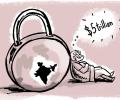
Chief Economic Advisor V Anantha Nageswaran on Thursday expressed hope that the economy will maintain the trend growth rate of 6.5 per cent and above for the rest of the years in the current decade. The economy will close the current fiscal logging in a growth of 6.5-7 per cent, he said, citing the projections of private sector analysts, Reserve Bank of India (RBI) and international agencies like OECD and the IMF. "This appears to be reasonable at this point in time although we will get the data on the fiscal second quarter in a few days, which will give more clarity on these numbers.

The country's largest software company Tata Consultancy Services (TCS) on Wednesday said its net profit increased 8.7 per cent year-on-year to Rs 11,342 crore in the September 2023 quarter. The Tata Group flagship had reported a net profit of Rs 10,431 crore in the year-ago period.

While stocks are at cheap valuations, the volatility can be unnerving.

India's manufacturing sector witnessed a modest growth in May, but going ahead "weak demand conditions" may persist.

The share of low-cost money in total deposits continued to take a knock at the close of FY23 as banks engaged in intense competition by offering higher interest rates on term money to garner funds amid tight liquidity conditions. The share of current accounts and saving accounts (CASA) in total deposits declined by 2-4 per cent by end of March 2023 from March 2022 figure, according to BSE filings by private banks. The ease of movement of funds on digital platforms and the deployment of money by businesses from current accounts also played a role in dwindling the share of CASA money.
